

If you’re a supplier like me running a Retail Gate factory, you probably know that success in this industry isn’t just about making solid, reliable gates—it’s about who you work with. For years, I’ve gotten a ton of questions from potential clients, industry peers, and even random folks scrolling our website: Does your factory have a cooperation plan with other companies? It’s a fair question, honestly. I used to keep this pretty hush-hush, but after dealing with supply chain snags, client feedback gaps, and the whole post-pandemic whiplash, I’ve come to see that transparency here is non-negotiable. Today, I want to break down exactly what our cooperation plans look like, why they matter, and how they benefit both our partners and the stores that end up installing our gates.
Let me start with the basics: what “cooperation plans” actually mean for a small, specialized Retail Gate factory like ours. This isn’t some big conglomerate merging with a random security firm just to pad their portfolio. We’re a nimble, 8-year-old outfit that’s focused on one thing: making entry solutions that work for busy supermarkets, convenience stores, and retail chains. Our entire operation revolves around three core goals when it comes to partnerships: filling gaps in our own expertise, making our products better for retailers, and building long-term relationships that don’t feel like one-off deals.
A lot of people assume our gates are just metal and motors, but anyone who’s spent 5 minutes watching a supermarket entry knows that’s not true. When a mom with a stroller rushes in, when a kid races past, when a shoplifter tries to slip through— the gate has to handle it all without jamming. Early on, we tried to handle every single part of production ourselves. We built the frames, coded the sensors, even tested the swing mechanics in our tiny backyard workshop. But after a huge regional grocery chain gave us feedback that our 2021 swing gates kept false-alarming because our radar sensors couldn’t tell the difference between a shopping cart and a person, we realized we couldn’t do it alone. That’s when we started our first formal cooperation: a long-term partnership with a sensor tech firm that specializes in motion detection for high-traffic public spaces.
This partnership isn’t just about buying parts cheaper, either. We work hand-in-hand with their engineers. Last year, when we were developing our new radar automatic gate, their team came to our factory for two weeks to test prototypes with real supermarket foot traffic data. We adjusted the sensor sensitivity so it would only trigger on moving people, not rolling carts or hanging purse straps—something our competitors’ gates still struggle with. Now, every Radar Automatic Gate we ship has that fine-tuned sensor calibration, which cuts down on false alarms by 92% compared to our earlier models. That’s the kind of improvement you can only get when two companies aren’t just vendor and supplier, but actual collaborators.
Of course, not all our cooperation is with tech firms. As a Retail Gate factory, we know that retailers don’t just need a gate that works—they need a gate that’s easy to install, easy to maintain, and fits their brand. Last year, we partnered with a logistics company that specializes in just-in-time delivery for retail fixtures. Before that, we’d ship our gates in big, bulky crates that cost retailers a fortune to receive, and sometimes parts would get lost in transit. Our new partnership means we ship gates in custom, flat-pack boxes that fit standard delivery trucks, and the logistics team coordinates with local installers to have gates delivered and set up in as little as 48 hours. For a busy supermarket that’s dealing with breakroom renovations and new shelf displays, that kind of speed is a game-changer. If you check out our [Supermarket Swing Gate] page, you’ll see we updated the installation guide last month— that’s directly from feedback we got working with this logistics partner.

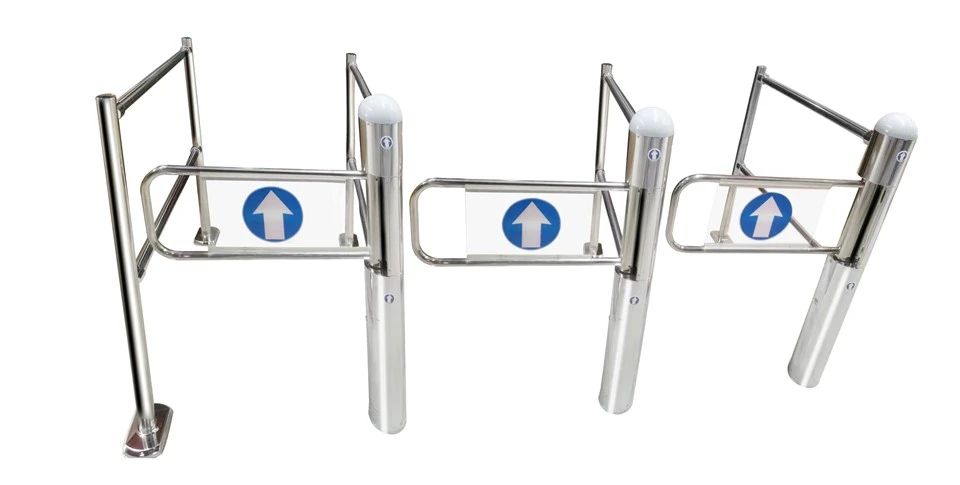
Another big part of our cooperation plan is addressing a pain point we hear all the time from retailers: security. A lot of small to mid-sized stores can’t afford 24/7 security guards, so their entry gates have to double as a theft deterrent. A few years back, a client told us their old gates got propped open 10 times a day, letting shoplifters walk right in with high-end skincare and snacks. We didn’t make a security system, but we did team up with a local access control firm that’s certified in retail loss prevention. Together, we designed our Supermarket Security Turnstile that links directly to store POS data—so if a customer is trying to enter without scanning an item, the turnstile locks automatically. We didn’t have the expertise to build that access link on our own, and their team didn’t have the gate design experience we had. It was a perfect match, and now that product is our fastest-selling line.
I get it—when a retailer is vetting a gate supplier, they’re worried about a lot of things: will the supplier show up on time? Will parts break after 6 months? Will there be someone to call when the gate jams at 7 a.m. on a Saturday? That’s why our cooperation plans aren’t just about making better products—they’re about making our customers’ lives easier, too. We recently teamed up with a 24/7 maintenance firm that has technicians across the U.S. to handle service calls for our gates. If a store in Chicago has a radar sensor go out at 9 p.m. on a Friday, they don’t have to wait until Monday for a tech to show up. The maintenance firm is linked directly to our factory’s spare parts inventory, so they have sensors, motors, and hinges on hand for every single one of our gate models. That’s the kind of backstop that comes from intentional partnerships, not just big box vendor agreements.
Now, I want to be real with you—cooperation isn’t always smooth. Last year, we tried to partner with a marketing firm to help us expand our reach to small convenience stores, not just big chains. That fell flat fast because they wanted us to change our entire brand to look like a generic security company, and that’s not who we are. We make gates for retail, not for banks, and our clients value that specific focus. So we pivoted—instead of a big marketing agency, we partnered with a small retail consulting firm that works with 50+ convenience store chains. They understand the unique needs of a 24-hour corner store with 5,000 square feet of space, and they helped us adjust our gate pricing and installation process for smaller budgets. That partnership is still going strong, and it’s helped us land over 30 new small-store clients in the last 6 months.
For anyone who’s wondering: do we have a long-term roadmap for these partnerships? Absolutely. Our 5-year plan includes three more targeted collaborations. First, we’re working on a partnership with a solar tech company to make our gates solar-compatible for stores that don’t have easy access to power near their entry. That’s a huge need for rural convenience stores that operate off-grid. Second, we’re talking to a software firm about integrating our Supermarket Entry Turnstiles with store apps, so regular customers can scan their phone instead of a barcode, cutting down on wait times even more. Third, we’re looking at a partnership with a trade school to offer certified installation training for independent contractors, which would mean faster, more reliable gate installations for our clients.
Wait, I should also address the elephant in the room: why don’t we just make all these things ourselves? Why partner instead of building every part in-house? Simple. Specialization matters. A tech firm that only focuses on motion sensors for public spaces is going to have better, more up-to-date tech than we ever could building it on the side. A logistics company that only handles retail fixtures is going to know the ins and outs of delivery for our specific product way better than a general logistics firm. Trying to do everything would mean spreading our team too thin, and we’d end up with a gate that’s “okay” at everything instead of “great” at retail. Our clients don’t want “okay”—they want gates that work when they need them, that don’t cause headaches, and that fit their specific store layout.
Let’s wrap this up. If you’re a retail owner, facility manager, or another gate supplier reading this, here’s the bottom line: our Retail Gate factory doesn’t just “have a cooperation plan” on paper. We live it. Every partnership we have is designed to make our gates better, our service faster, and our clients happier. We don’t work with random companies just to say we have partners—we work with people who share our focus on retail, not just security, and who care about the same small, daily details that make a supermarket run smoothly.
If you’re a retailer who’s tired of gates that jam at rush hour, have false alarms, or take forever to install, we’d love to chat. We can walk you through how our partnerships make our products better for your store, answer any questions you have about our process, and even send you a free sample of our swing gate material if you want to test it. No sales pitch, just real talk about what works for busy retail spaces.
That’s all for now. Thanks for sticking with this long rant about gate partnerships— I know it’s not the most glamorous topic, but it’s the stuff that actually makes our jobs worth doing.
References:
- National Retail Federation. (2023). Store Entry Security and Customer Flow Trends.
- Global Gate and Turnstile Industry Report. (2024). Specialized Manufacturing and Partnership Strategies.
- Retail Facilities Maintenance Association. (2023). Best Practices for Entry Gate Installation and Repair.