

If you’ve ever sourced metal storage or transport solutions for warehouses, retail operations, or manufacturing facilities, you’ve probably paused mid-search to ask: what is the average price of a steel roll cage? As a long-time supplier of these durable, multi-use units, I’ve fielded this question dozens of times from small business owners, logistics managers, and operations leads alike—and the answer is rarely one-size-fits-all. Steel roll cages aren’t a generic product; their price shifts dramatically based on size, material gauge, intended use, and even regional supply chains, so digging into the variables that shape these costs is the only way to get a number that works for your specific needs.
First, let’s ground this in what a steel roll cage actually is, because the term often gets mixed up with similar items like industrial carts or storage racks. Unlike flimsy plastic bins or light-duty wire baskets, a standard steel roll cage (also called a roll container cage or roll trolley) is a rigid, wheeled metal frame designed to hold heavy loads, move goods across a facility, or stack securely to maximize storage space. They’re workhorses for retail stocking, e-commerce order fulfillment, food and beverage transport, and even hospital supply management, which means their build has to match the demands of their job.
To get a clear picture of average pricing, I’ve split costs into three core categories: entry-level units for light, occasional use, mid-range workhorses for regular industrial or commercial operations, and heavy-duty models for high-capacity, long-term, or harsh environments. Let’s break each down with real-world numbers I’ve seen in my 10 years in this space, as well as factors that can nudge prices up or down a few hundred dollars depending on your location and order size.
Entry-level steel roll cages are the most common for small retailers, seasonal warehouses, or occasional moving and storage use. These are typically built with thinner steel gauges (usually 1.2 mm to 1.5 mm), basic mesh sides, and standard fixed or swivel wheels rated for light loads (around 150 to 250 kg total capacity). Most are foldable for easy storage when not in use, which cuts down on their material costs—foldable units use less steel than rigid, non-collapsible models. For these entry-level options, the average price I quote is between $120 and $220 per unit. That said, there are caveats: if you’re ordering just one for a small boutique, you might hit the higher end of that range because of small-batch manufacturing overhead. If you’re buying 20 or more for a pop-up shop or seasonal stock, you could negotiate pricing as low as $100 per unit, depending on your order volume. It’s worth noting that entry-level units aren’t built to handle heavy, frequent use—thinner steel can bend or warp after 6 to 12 months of daily use, so if you’re looking for something that will last, you’ll want to step up to mid-range.
Mid-range steel roll cages are the sweet spot for most small to mid-sized warehouses, grocery chains, and e-commerce fulfillment teams. These use thicker steel gauges (1.5 mm to 2.0 mm) for the frame and sides, which boosts durability and load capacity to 250 to 500 kg—enough for moving pallets of clothing, grocery stock, or e-commerce order bins. Many mid-range models also come with added features like reinforced corners, brake systems on wheels to keep units from rolling unattended, and optional extra shelving or mesh panels to customize storage space. The average price here ranges from $220 to $450 per unit, with bulk orders of 50 or more often coming in at the lower end of that range, as manufacturers can spread setup and shipping costs across more units. For context, our most popular mid-range option—built to fit standard retail stock dimensions—sits at $310 per unit, a price point that balances durability and value for teams using these cages 5+ days a week. If you’re shopping for units tailored to a specific use case, like the mesh-sided models ideal for grocery stocking, our Mesh Cage Trolleys fall right in this mid-range bracket, with an average cost of $290 to $410, depending on size.
Heavy-duty steel roll cages are built for the toughest environments: large manufacturing plants, cross-docking facilities, or operations handling bulk raw materials like metal parts or heavy packaging. These use 2.0 mm to 2.5 mm thick steel, reinforced frame joints, and industrial-grade wheels rated for up to 1,000 kg per cage—more than enough to move full pallets of heavy goods without bending or warping. Many are also designed to be nested for shipping, which keeps transport costs low even for large orders, and some come with lockable doors for security of high-value items like electronics or pharmaceuticals. The average price for a heavy-duty steel roll cage starts at $450 and can go up to $1,000 or more, depending on customizations like rust-resistant powder coating, specialized wheel options for uneven warehouse floors, or built-in RFID tracking mounts for inventory management. For teams that need secure transport for parcels or high-value stock, Roller Security Cages in this heavy-duty category average $520 to $780, with pricing adjusting for custom dimensions or locking mechanisms.

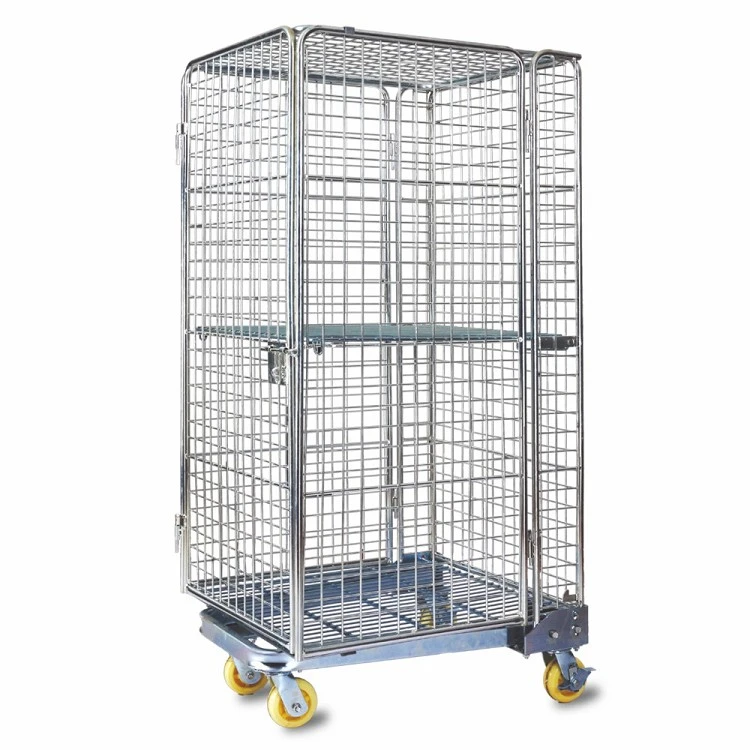
Now, there are a handful of factors that can shift these average prices significantly, so it’s important to account for them when you’re budgeting. First, size: the standard steel roll cage is roughly 80 cm x 120 cm x 150 cm, but custom sizes for specific facility layouts or stock dimensions can add 10 to 20 percent to the cost. For example, a custom deep cage to fit 1-meter pallets might cost $50 to $100 more than a standard-sized unit. Second, material coating: basic steel comes unfinished, so you’ll pay extra for powder coating (a rust-resistant finish ideal for warehouses with high humidity or food-grade operations) or galvanized steel for outdoor use. Powder coating adds about $25 to $50 per unit, while galvanized models can be $100 to $150 more expensive upfront but last 2 to 3 times longer in harsh conditions. Third, wheel and mobility features: basic fixed wheels cost almost nothing extra, but adding swivel brakes, non-marking wheels for supermarket floors, or heavy-duty rubber wheels for concrete or outdoor grounds can add $30 to $100 per unit.
Shipping and order volume also play a huge role in average cost, which is something many first-time buyers overlook. Steel roll cages are large and heavy, so shipping costs can add $50 to $150 per unit for small orders within the continental U.S. When you order in bulk, though, that shipping cost gets split across dozens of units, bringing the per-unit shipping cost down to $10 to $30. A common question I get: how does ordering multiple units affect price? For order sizes of 10 to 29 units, you’ll typically pay full per-unit pricing with minor bulk discounts. For 30 to 99 units, discounts of 10 to 15 percent are standard, and orders of 100+ units can get you 20 percent off or more, depending on your exact custom needs.
It’s also helpful to compare steel roll cages to similar products to make sure you’re paying a fair price for what you need. Many people confuse steel roll cages with multipurpose roll containers, which are often smaller, lighter, and designed for smaller loads, with average prices of $80 to $180 per unit. While multipurpose roll containers can work for light storage, they aren’t built for the same heavy use as steel roll cages, so their lower cost often comes with shorter lifespans. Roll Container Cages, another common alternative, sit between the multipurpose container and mid-range steel roll cage, with average prices of $180 to $300, making them a good fit for light industrial use but not for heavy daily load capacity. For retail-specific needs, Supermarket Cage Trolleys are designed with narrower dimensions to fit through standard supermarket aisles, with average pricing of $250 to $380—slightly higher than standard mid-range units due to their custom, aisle-friendly sizing.
Another key factor to consider is total cost of ownership, not just upfront price. A $120 entry-level steel roll cage might seem like a great deal, but if it breaks after 6 months of daily use, you’ll spend $240 to replace it in a year—more than the $180 mid-range unit that will last 3 to 5 years. For high-volume operations, that long-term savings is where the true value of a mid or heavy-duty steel roll cage shines. I always tell new buyers to ask two questions: how often will this cage be used, and what’s the maximum load it needs to carry? If the answers are “five days a week” and “more than 300 kg,” the lower upfront cost of an entry-level model isn’t worth the hassle of frequent repairs or replacements.
Regional pricing differences also play a part in average costs, though they’re smaller than they used to be as manufacturing has become more global. In the U.S., steel roll cage pricing is fairly consistent across the country, with slight hikes in coastal areas due to higher shipping costs. In Europe, pricing is often 10 to 15 percent higher than in the U.S. due to stricter safety regulations that require thicker steel gauges for industrial use. In emerging markets, entry-level units can be as low as $80 per unit, but these are often made with thinner steel that doesn’t meet international durability standards, so it’s important to check for certifications like ISO 9001 or OSHA compliance if you’re using units for warehouse operations in the U.S.
If you’re still trying to pin down a specific average price for your needs, the best way is to outline your exact requirements and reach out to a reliable supplier. For example, if you need 40 mid-range steel roll cages for a grocery chain with standard dimensions and powder coating, the average total cost would be roughly $11,000 (40 units x $275 each, after bulk discount and shipping). If you need 15 heavy-duty units for a manufacturing facility with custom wheel options, that total would be around $8,250 (15 units x $550 each, including shipping and custom features).
At the end of the day, the “average” price of a steel roll cage is less a single number and more a range tailored to your use case. Entry-level units for light, occasional use average $120 to $220, mid-range for regular commercial use average $220 to $450, and heavy-duty for industrial or harsh environments average $450 to $1,000. The best way to get an accurate price is to align your cage’s features with your operations—don’t pay for extra durability you don’t need, but don’t skimp on build quality if your cages will be working hard.
If you’re ready to get a customized quote for steel roll cages, or want to learn more about our range of roll-based storage and transport solutions including Multipurpose Roll Containers, Roll Container Cages, Supermarket Cage Trolleys, Roller Security Cages, and Mesh Cage Trolleys, feel free to connect with our team to discuss your needs. We work with small businesses, large retailers, and industrial facilities to deliver durable, competitively priced steel roll cages that fit your exact requirements.
References:
- Material Handling Industry Association. (2024). Guide to Steel Roll Cages: Durability, Specifications, and Cost Benchmarks.
- U.S. Department of Labor, Occupational Safety and Health Administration (OSHA). (2023). Safety Standards for Industrial Rolling Storage Equipment.
- Global Market Insights. (2024). Steel Roll Cage Market Size, Share, and Industry Analysis, 2024-2030.
- Retail Industry Leaders Association. (2023). Store Operations and Material Storage Best Practices.